

A good barbecue isn’t just about what you put on the grill.
A great BBQ doesn't happen by accident.
The truth is, many of the most common barbecue mistakes are made before the food even hits the grill. From choosing the wrong fuel to cooking over inconsistent heat, these small oversights can have a big impact on flavour.
To help you make the most of BBQ season, we've rounded up the most common mistakes we see and, more importantly, how to fix them.

1. Get the Basics Right
Getting the fundamentals right not only improves your BBQ experience but also ensures everyone stays safe.
- Safety first: Always make sure your BBQ is set up on sturdy ground, well away from sheds, fences, and overhanging branches. During dry spells, keep a bucket of water or sand nearby, especially if you’re cooking near dry grass or wooden decking.
- Keep it clean: For optimal flavour, make sure to regularly clean old ash and grease from the grill before you start.
- Check the rules: If you live in a flat or shared accommodation, check your building's rules. Many restrict charcoal BBQs on balconies due to fire risks and smoke. Even where permitted, consideration for neighbours is essential in close living environments.
2. Your Fuel Choice Matters More Than You Think
Fuel choice has a major impact on how your BBQ performs, yet it’s often completely overlooked. Low-quality or damp charcoal burns unevenly, produces excess smoke, and makes temperature control much harder. Clean-burning lumpwood charcoal helps outdoor cooks achieve better flavour with less smoke and holds heat more consistently throughout the cook.

3. Don't Overload (or Underfill) the BBQ
Getting the amount of charcoal right is more important than many people realise. Too much fuel restricts airflow and makes temperature control impossible, while too little leaves you struggling to maintain enough heat to cook thoroughly.
The golden rule: Build the fire gradually. Aim to cover about half to two-thirds of your charcoal grate in a single, even layer of coals. This provides enough fuel for a strong fire while leaving an empty, cooler space to move food if flare-ups occur.
4. Use Two Heat Zones, Not One
Most people spread charcoal evenly and cook everything at the same temperature. A far better approach is to bank the coals to one side, creating a hot zone for searing and a cooler zone for slower cooking or resting.
This gives you far more control, particularly useful when cooking a mix of meats and vegetables, or when something needs to finish cooking without burning. It’s a technique borrowed from restaurant kitchens and it makes outdoor cooking considerably easier to manage.

5. Let the Charcoal Ash Over Before You Cook
Once you've added the appropriate amount of fuel and set up your two heat zones, make sure not to put the food on too early!
Charcoal that’s still black and smoking hasn’t reached an even temperature yet. Wait until the coals have a light grey ash coating, that’s when the heat is steady, radiant and ready to cook evenly. Rushing this stage is why food often burns on the outside before it’s cooked through. Patience here pays off every time.
6. Think About What’s Actually on the Grill
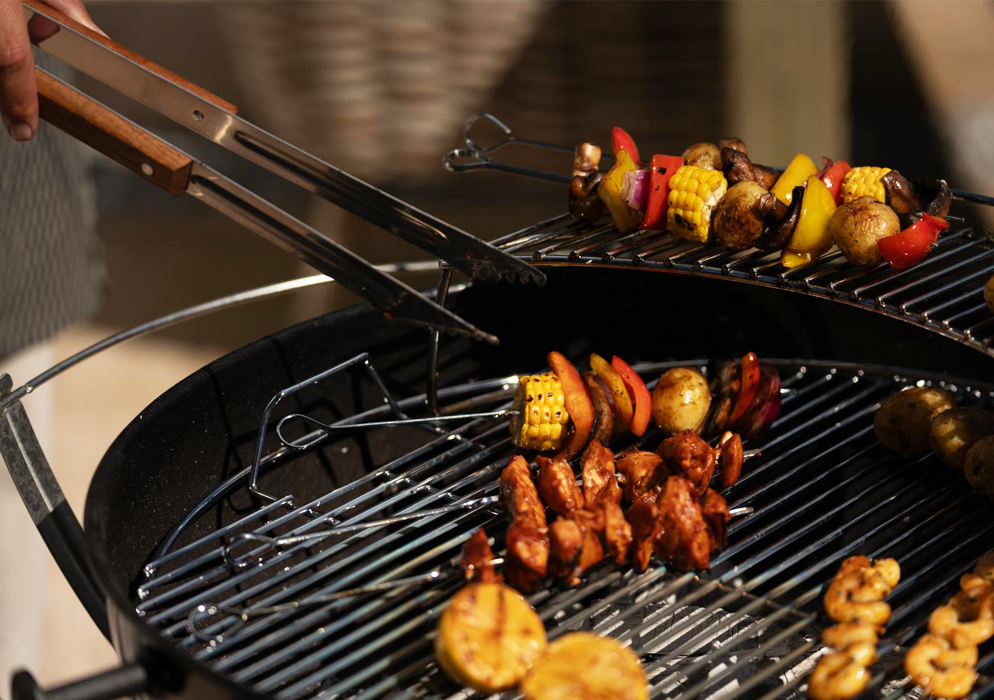
Now that your BBQ is prepped and ready, you need to ensure the food is cooked the right way. Even food placement matters, as uneven spacing can easily lead to inconsistent cooking.
Not all foods behave the same way on a barbecue. Fatty cuts of meat can cause flare-ups, while heavily oiled marinades can drip onto hot coals and create sudden bursts of flame.
Trimming excess fat, using drip trays where appropriate and allowing marinades to drain slightly can all help improve control over the cook.

What to Avoid
A few habits that consistently cause problems:
- Lifting the lid constantly. Every time you open the BBQ, you lose heat and extend cooking time. Trust the process, check less, cook better.
- Putting cold meat straight on the grill. Food straight from the fridge hits the hot grate and contracts, cooking unevenly and sticking. Take meat out 20–30 minutes before cooking to bring it closer to room temperature.
- Using lighter fluid on lumpwood charcoal. It can taint the flavour of food and create an uncontrolled flare. Good quality charcoal with a natural firelighter is always the cleaner option, and you'll taste the difference.
- Pressing down on burgers or chicken with a spatula. It feels satisfying, but it squeezes out the juices, drying the meat out. Leave it alone and let the heat do the work.
- Closing all the vents. Airflow controls temperature. Shutting the vents entirely starves the fire rather than cooling it gradually. Adjust them incrementally instead.
- Seasoning too early. Salt draws moisture out of meat. Season just before it goes on the grill, not hours in advance, unless you're deliberately dry-brining overnight.
Get BBQ-Ready with Homefire
The right preparation and quality fuel mean you can enjoy a hassle-free barbecue without the stress. Homefire's premium BBQ range offers a solution for every type of griller:
- Homefire Lumpwood Charcoal: A reliable option for everyday grilling with a strong, natural burn.
- Restaurant-grade lumpwood charcoal provides extended burn times and consistent heat for longer sessions or larger gatherings.
- Homefire Lumpwood Charcoal: Gets things going without needing separate firelighters or lighter fluid.
-
Twizlers Wood Wool Natural Firelighters: Helps get any fire started quickly and naturally.